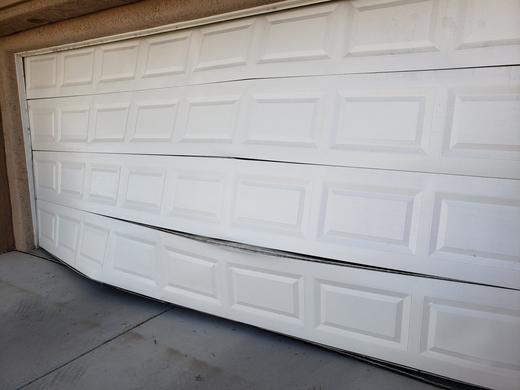
Garage Door Opener Repair in Las Vegas
The Short Answer
Garage door opener repair in Las Vegas is usually a same day fix. If the motor hums but the door does not move, the drive gear is often stripped. If nothing happens at all, it may be a simple part. We carry gear kits and parts for the big brands and give you a firm price before any work.
The Problems We See Every Week
Stripped drive gears are the classic hum with no movement. Heat cooked circuit boards are common after our summers. We also see worn belts and chains, bad wall buttons, and limit settings that drift until the door stops or reverses on its own.
Our trucks carry gear kits, sensors, and parts for the major brands, so most repairs finish in one visit.
Repair or Replace
If your opener is under ten years old and the problem is a gear or a sensor, repair is the smart money. If it is from before 2013, has an old style logic board, or the motor itself is dying, a new unit usually wins. New openers are quieter, safer, and often cost less than saving an old one. We quote both and you choose.
The Root Cause Check
An opener rarely dies alone. Before we repair one, we always test the door balance. Tired springs make the opener lift weight it was never built for. That is what strips the gears in the first place.
Fixing the opener without fixing the balance just schedules the next failure. We do both, and the repair lasts.
Cost, Timing, and What Is Included
We test the opener first, then quote the repair in writing before any work starts. The visit includes a check of the door balance, since tired springs are the main reason openers fail. We finish with a safety reverse test before we leave.
If a repair would cost close to a new unit, we say so. We are an authorized LiftMaster dealer and can put in a new opener on the same visit. Our coupon takes $100 off a LiftMaster belt drive opener installed. See garage door opener installation for what that job includes.
Related Repairs We Often Find
A door that reverses on its own is often a sensor problem, covered on our safety sensor repair page. Remotes and keypads that stopped working are a quick remote and keypad programming job. And if the opener hums but the door will not lift, a broken spring is the usual cause, so read about garage door spring repair before you run it again.
Customers who need opener repair often ask about opener installation and smart opener and wifi upgrades on the same visit. One trip can cover all of it. For urgent help any hour, see our same day service or the 24/7 emergency page.
We offer this service across the entire Las Vegas Valley. That includes Las Vegas, North Las Vegas, Henderson and every community we serve. Same day scheduling on most calls.
Updated
Most garage door opener repairs in Las Vegas come down to one of six things, and four of them cost you nothing to check. Work through them in this order. Power, a locked wall button, a weak remote battery, then the safety sensors. If none of those fix it, you are looking at a worn gear, a bad logic board or a limit and force setting, and that is a job for a tech.
Before you start, one rule. If the door will not move by hand, or it hangs crooked, stop. That is a spring or cable problem, and the opener is not the cause. Do not run the opener against it.
The short version
- Opener dead with no light at all means power or a failed board. Check the outlet first.
- Remotes dead but the wall button works means a lock setting or a remote battery.
- Door closes a few inches and goes back up means the safety sensors or the down limit.
- Motor hums or clicks but the door does not move means a worn gear, a broken spring, or a motor that is too hot.
- A repair is a gear, sensor, wall button or remote. A new opener makes sense when the board and motor are both going.
What you can check yourself in 5 minutes
Start with the cord. Plug a lamp into the same outlet. If the lamp is dead, the outlet or its breaker is the problem, not the opener. If the outlet has test and reset buttons, press reset once.
Next, look at the wall button. On many LiftMaster and Chamberlain controls, a flashing button means lock mode is on. Lock mode turns off every remote but leaves the wall button alone. The LM800A manual says to hold the Lock button for 2 seconds and the flashing stops. Your control may differ, so check its manual.
Then the remote. A weak battery is the cheapest fix there is. Genie says to replace remote batteries at least every 2 to 3 years, and that a keypad outside drains faster because of temperature swings. Do not hold the Learn button on the opener to test it. Chamberlain warns that holding it even a few seconds erases every remote you programmed.
Last, unplug the opener for 5 seconds and plug it back in. Chamberlain lists this as the reset step for a motor fault code.
Safety first. Never reach for the spring, cable drums or bottom brackets. Those parts are under tension and can hurt you badly.
Safety sensors and the blinking light codes
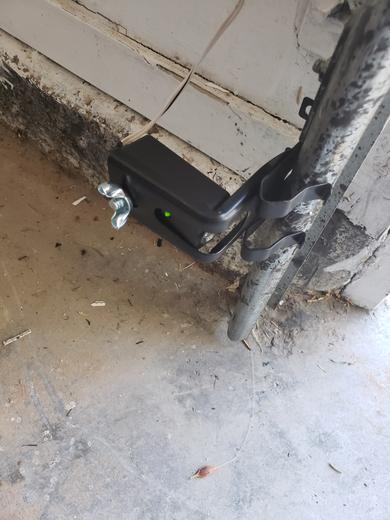
If the door starts down and reverses, or will not close at all, look at the two small eyes near the floor on each side of the door. They should sit about 5 to 6 inches off the floor and face each other, per Genie. Both lights should glow steady. A blinking light means they are out of line, dirty or blocked.
Wipe both lenses with a soft cloth. Check for a spider web, a bumped bracket or a loose wing nut. Realign the blinking eye until its light holds steady. Sun hitting a lens straight on can blind it too, which is common on west facing doors.
Now read the opener. On many Chamberlain and LiftMaster units, the light next to the Learn button flashes a code. Chamberlain lists them.
- 1 flash means a broken or disconnected sensor wire.
- 2 flashes means a shorted sensor wire or reversed black and white wires.
- 3 flashes means the wall control light or screen is not lit. Look for a staple through the wire.
- 4 flashes means the sending light is steady and the receiving light is dim or flashing. Loosen the wing nut, clean the lens and realign.
- 5 flashes means no motor rotation was sensed in the first second. More on that below.
- 6 flashes means a motor circuit failure, and Chamberlain says to replace the logic board.
Codes vary by model, so match yours to the chart. Chamberlain also says openers made after 2022 no longer blink the light 10 times when a sensor stops the door from closing. A newer opener may just refuse to close with no warning.
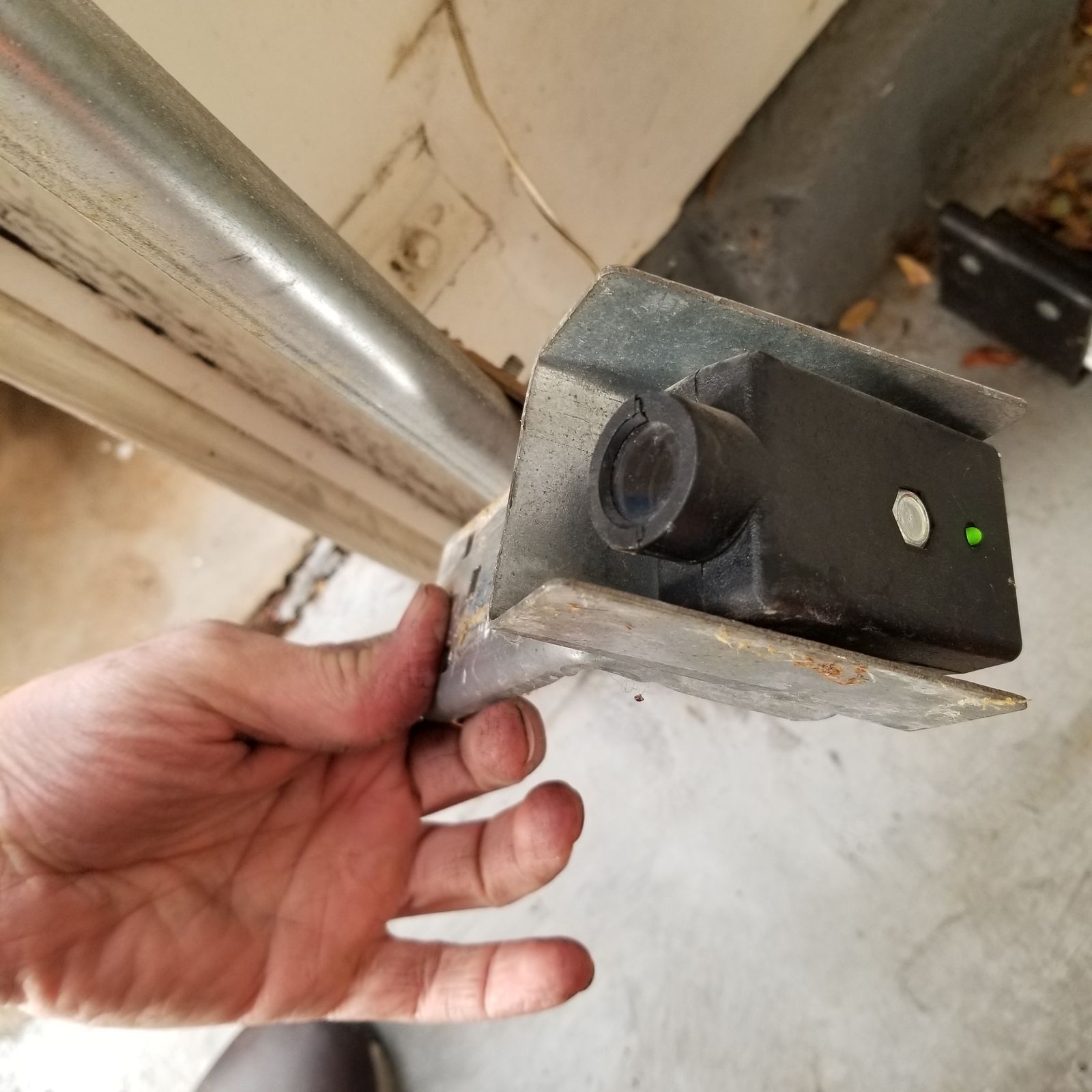
A sensor repair is usually quick. Our safety sensor repair page covers when to replace the pair.
Hum, click or no movement
This is the one that scares people. The motor runs or hums, but the door sits still. Check the door first. Pull the red release cord and lift the door by hand. If it feels heavy or will not stay halfway up, a spring has failed. Running the opener against that is what strips gears.
If the door lifts easily, the opener is the problem. Chamberlain ties the 5 flash code to how long the hum lasts.
- Hums under 5 seconds, then shuts off. Check door balance, a broken spring, a lock bolt, a trolley stuck on the stop bolt, or the capacitor, gears or motor.
- Hums 5 to 30 seconds, then shuts off. Check balance, a disconnected trolley, a broken sprocket or stripped gears.
- Moves only 6 to 8 inches. The RPM sensor may be bad.
- One click, no movement. On AC units the motor may be hot, or the board or transformer may have failed.
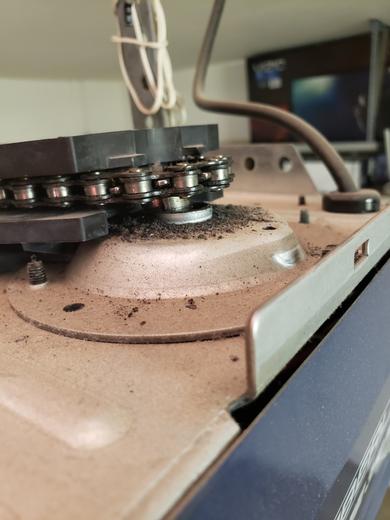
The stripped drive gear is the classic. It takes the strain every time the door moves, so a heavy door wears it down. When we open the housing, you can often see fine dust around the shaft.
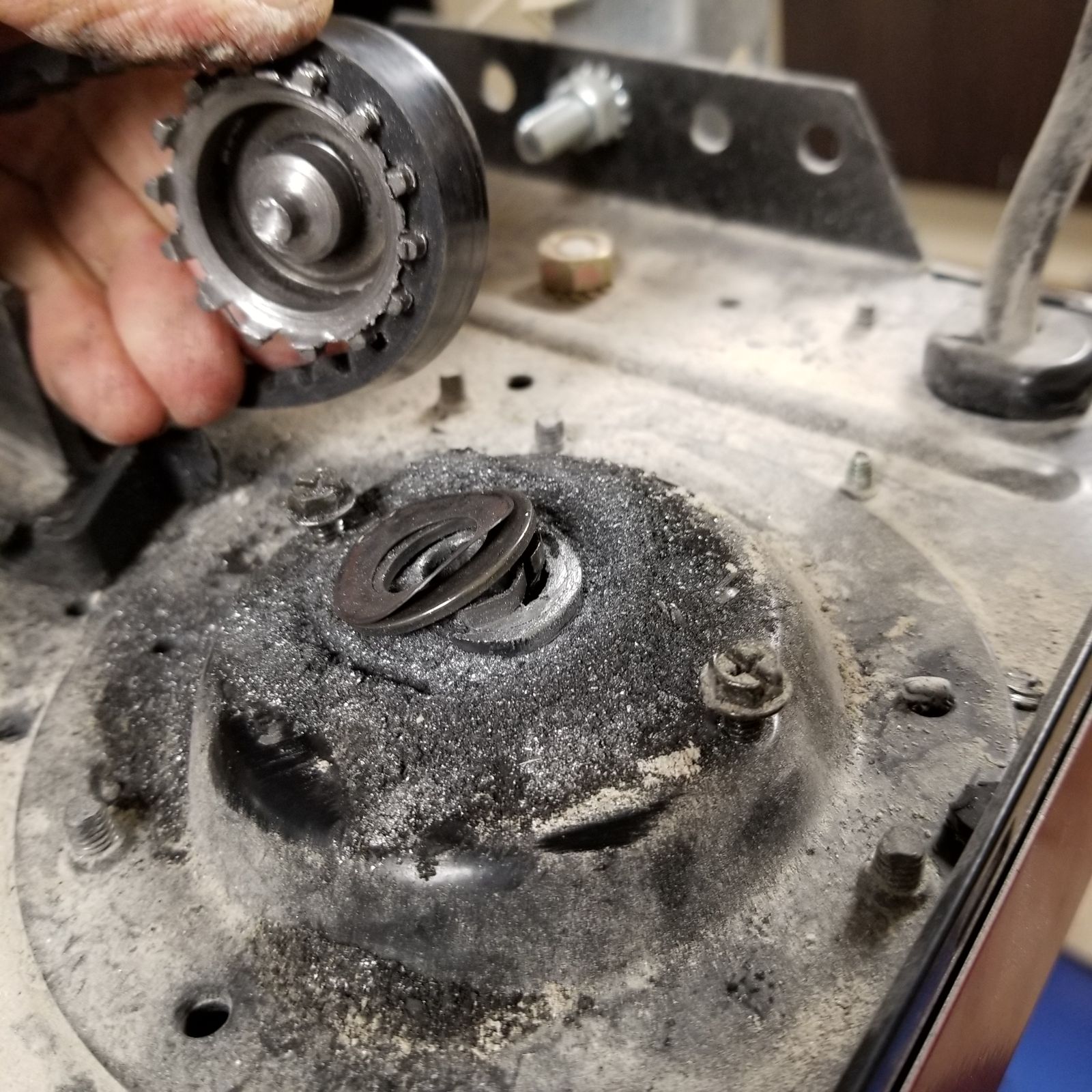
Replacing a gear kit is a pro job. It means pulling the motor housing off a ceiling mounted unit. Do it only with the opener unplugged. Our spring repair page covers the balance problem that usually causes it.
Logic board, limits and force
The logic board is the opener brain. Signs it is going are no lights at all, a wall button that works only some days, or random opening and closing. The repair is a board swap. It costs more than a sensor, so we confirm power and the wall wiring first.
Limits tell the opener where up and down are. Force tells it how hard to push before it decides something is in the way. When they drift, the door stops short or reverses before the floor. The LM800A manual says to repeat the limit setting steps, then the force steps. Set limits first, then force, and keep force as low as the door needs. Force set too high can defeat the safety reverse.
After any adjustment, test it. Chamberlain says to lay a 2x4 flat on the floor under the door and close it. The door must reverse on contact. If it stops on the board instead, the down travel is too short. Increase it and test again. Run this test every month.
A door that fights the opener is also a balance problem, so a tech should check both.
Belt, chain and screw drive
The drive type changes the noise and the upkeep, not how a pro diagnoses it.
- Chain drive is usually the budget pick and the loudest. The chain needs lube and slack check.
- Belt drive runs quieter and is the usual pick for a garage under a bedroom. Our belt and chain drive repair page covers worn belts.
- Screw drive has fewer moving parts. Genie says to wipe off old lube and apply new lube to the screw.
A drive repair is a part swap. Whatever the type, the same two questions come first. Is the door balanced, and are the sensors happy.
What opener repair costs
We never post a price list. We test first and give you a firm written price at the door before work starts. Here is what published guides say, so you can judge any quote. We compared three of them in our repair cost guide.
HomeAdvisor, Raynor Door Authority and The Home Depot (page saved February 8, 2026), as compared in the Swift repair cost guide.
The widest range is opener repair, because the label covers a wall button and a logic board. Ask the tech to name the exact part. Be careful when the quote tops the price of a new opener.
The Las Vegas angle
Heat is hard on electronics. A normal year in Las Vegas brings about 78 days at 100 degrees or higher and 9 days at 110 or higher, per the National Weather Service. Chamberlain says a motor that overheated needs 45 minutes to cool before it will run again.
Monsoon storms bring wind and outages. On July 1, 2025, gusts reached 60 mph at the airport and at least 70 mph around Henderson, and more than 30,000 customers lost power. The season generally runs June 15 through September 30. After an outage, if the opener will not respond, do the unplug and replug reset before you call.
A battery backup keeps the opener working through an outage. Genie advises you test yours before summer storm season.
Dust and sun matter too. Dust coats sensor lenses, and low sun can blind them. Our sun and garage door guide goes deeper.
What to tell us on the phone
Have these ready when you call us.
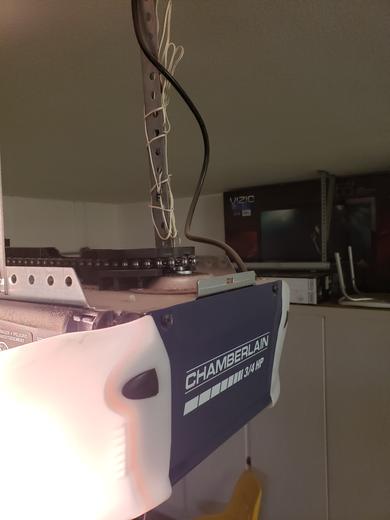
- Brand and model on the label on the motor.
- What the opener does. Silent, hums, clicks or runs.
- The blink count, and where the light is.
- Whether the door lifts by hand.
- Whether the wall button works when the remote does not.
- When it last worked, and whether a storm or outage came first.
That lets us bring the right gear kit or board. Book a visit or call and we give you a firm written price at the door. We also carry gear kits and parts for LiftMaster, Chamberlain and Genie.
Repair or replace, and how to hire
Repair a unit with a failed part and a healthy motor. Replace when the board and the motor both show wear, parts for the model no longer exist, or the repair costs close to a new opener. See our coupons for $100 off an installed LiftMaster belt drive opener, and our opener installation page.
Before you hire anyone, check the license. Look the company up with the Nevada State Contractors Board, using the consumer checklist. Get a written contract. A deposit is capped at $1,000 or 10 percent of the price, whichever is less, unless the contractor posts a $100,000 bond. Our own number is on our license page, license 0082445.
Common Questions
My opener hums but the door does not move. What is it?
Usually a stripped main gear, which we can fix. But first we check for a broken spring. Running the opener against a dead spring is what strips gears.
Why does my door reverse before touching the floor?
The travel limit may need adjusting, or the safety sensors are dirty, bumped, or blinded by sun. Sun glare on sensors is very common in Las Vegas. All of these are quick fixes.
Do you repair all opener brands?
We service LiftMaster, Chamberlain, Genie, Craftsman, Linear, and most others sold here. If parts for an old unit no longer exist, we will tell you straight and quote a new one.
How much does garage door opener repair cost?
It depends on the part. A sensor or wall button costs far less than a new logic board. We test first and give you a firm written price before we start.
Can you fix my opener the same day?
Most of the time, yes. Our trucks carry gear kits, sensors, and common parts for LiftMaster, Chamberlain, and Genie openers.
Why is my garage door opener not responding to the remote?
Start with the remote battery, then check whether the wall button is flashing. A flashing wall button on many LiftMaster and Chamberlain controls means lock mode is on. If the wall button works and the remote does not, the remote may need to be programmed again.
What does it mean when one garage door sensor is green and one is yellow?
On most models both lights should glow steady. A light that blinks or is dim means the two eyes are out of line, dirty or blocked. Clean both lenses, check the bracket and realign the blinking eye until its light holds steady.
Why does my opener hum and shut off after a few seconds?
The motor is not sensing movement. A broken spring, a stuck trolley, stripped gears or a hot motor can all cause it. Check that the door lifts easily by hand before you press the button again.
Will a power outage damage my garage door opener?
An outage alone usually does not hurt it. If the opener will not respond after an outage, unplug it for 5 seconds and plug it back in. If it still has no lights, the board may be damaged.
How do I test that my opener still reverses?
Lay a 2x4 flat on the floor under the door and close it. The door must reverse when it touches the board. If it stops on the board, the down travel is too short. Test it every month and after any adjustment.