The Short Answer
The most common garage door repair is a broken spring. Springs lift almost all of the door's weight, they wear out by the cycle, and when one snaps the door suddenly feels like it weighs a ton. After springs, the usual calls are openers, safety sensors, cables, rollers and track, and dented panels. Most of these jobs cost a few hundred dollars, not the price of a new door.
This Guide at a Glance
- Springs top the list. Clopay, the big door maker, says spring repairs often lead the pack.
- A typical repair runs about $265 nationally, with most people paying $155 to $379, per HomeAdvisor.
- A door that will not close is often the safety eyes, not the motor.
- Frayed cables and broken springs are not do it yourself jobs. The tension can hurt you.
- A cheap fix today can save a bigger part tomorrow. Worn rollers wear out track.
The Most Common Garage Door Repairs, Ranked
We fix a lot of garage doors in the Las Vegas Valley, and the same few parts fail again and again. Here they are, worst first, with what each one looks like from your driveway.
1. Broken Springs
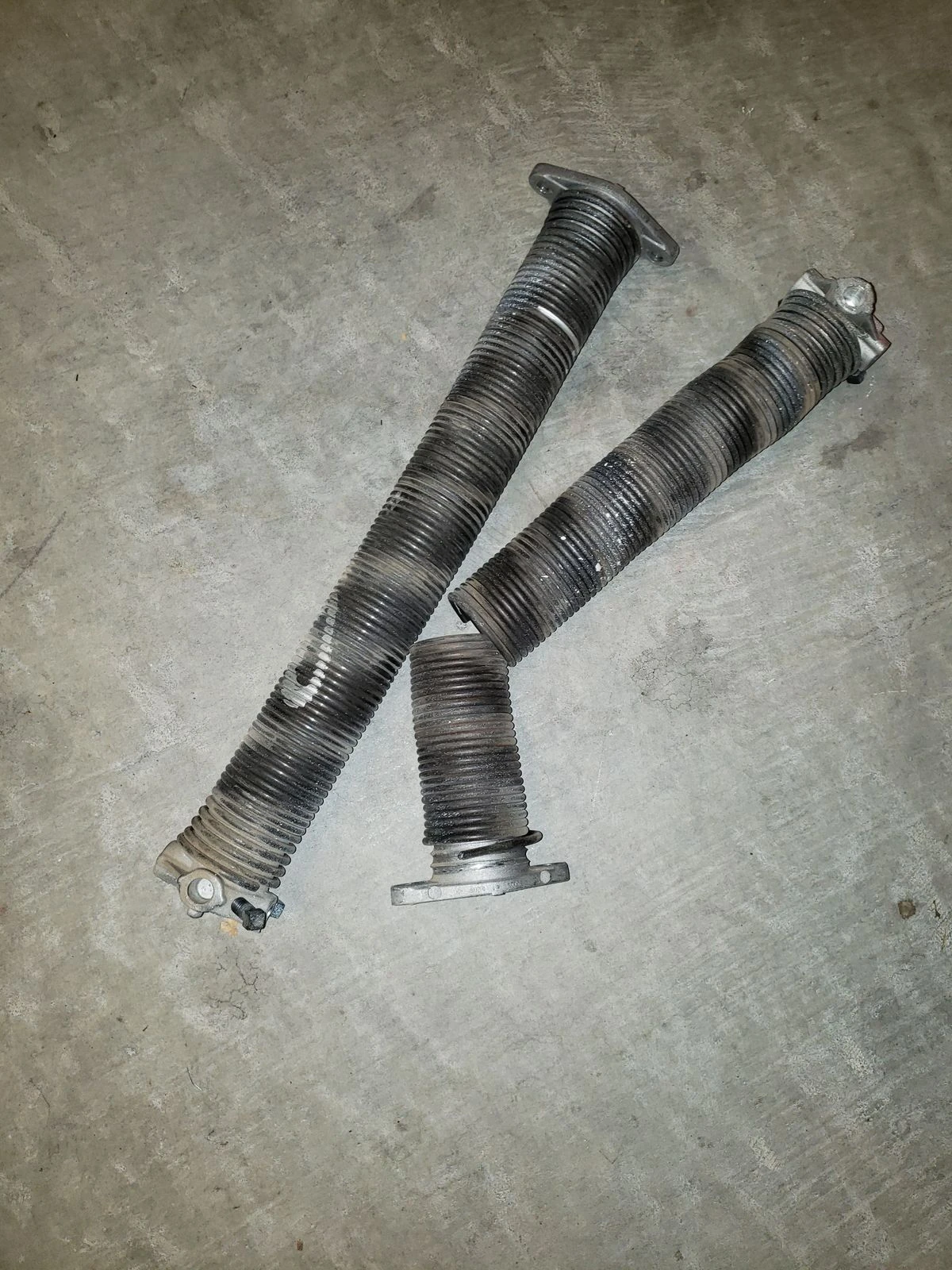
This is the big one. Clopay's guide to common repairs (January 31, 2025) says spring repairs often top the list of garage door problems. The springs do the heavy lifting. The opener only guides the door.
Springs fail because they are rated by cycles. One cycle is one trip up and one trip down. A spring supplier's comparison lists a standard pair at 10,000 cycles and says that pair reaches its rating in about 2.7 years at 10 cycles a day. Here is a worked example for a lighter family. At 4 cycles a day you use 1,460 cycles a year, so a 10,000 cycle spring reaches its rating in under 7 years.
Signs it broke. A loud bang from the garage. A gap in the coil above the door. The opener hums and lifts the door a few inches, then quits. Stop using the door when you see this. Our broken spring replacement page explains what we change and why.
2. Opener Trouble
The remote stops working, the motor hums but nothing moves, or the door starts and then reverses. Some of these are simple, like a dead remote battery or a lost program. Others are a worn gear or a failed logic board. HomeAdvisor lists opener repair at $100 to $500. If the opener is old and the fix is near the top of that range, it may be time to compare a new opener repair quote with a replacement.
3. Safety Sensors Out of Line
The door goes down, then pops right back up. Or it only closes while you hold the wall button. That often points to the safety eyes near the floor.
Those eyes are not optional. Federal rules in 16 CFR Part 1211 cover home openers made on or after January 1, 1993. They call for a second layer of protection, and one allowed setup is an outside photoelectric sensor that sends a closing door back to fully open. The same rule says a sensor that needs to be aimed must have a way to show it is lined up, which is why the little lights on yours matter. If one light is off or blinking, the eyes are not seeing each other.
A bumped sensor, a spider web or dirty lens can do it. So can a low sun shining straight into one, which we cover in our post on doors that will not close in the sun. HomeAdvisor puts sensor realignment at $150 to $250 when a pro does it. See our safety sensor repair page if wiping and aiming them does not fix it.
4. Frayed or Snapped Cables
Cables run from the bottom corners of the door up to drums at the top. They work with the springs. A frayed cable, or one that jumped off its drum, can leave the door hanging crooked. HomeAdvisor lists cables at $100 to $400. Do not pull on a loose cable. It is tied into the spring tension. Our cable repair page shows what we check.
5. Worn Rollers and Bent Track
Rollers are the small wheels that ride in the track. When they wear, the door gets loud, shaky, and slow. Let them go long enough and a door can come out of its track. HomeAdvisor lists track repair anywhere from $5 to $400, since it can mean a loose bolt or a bent section.
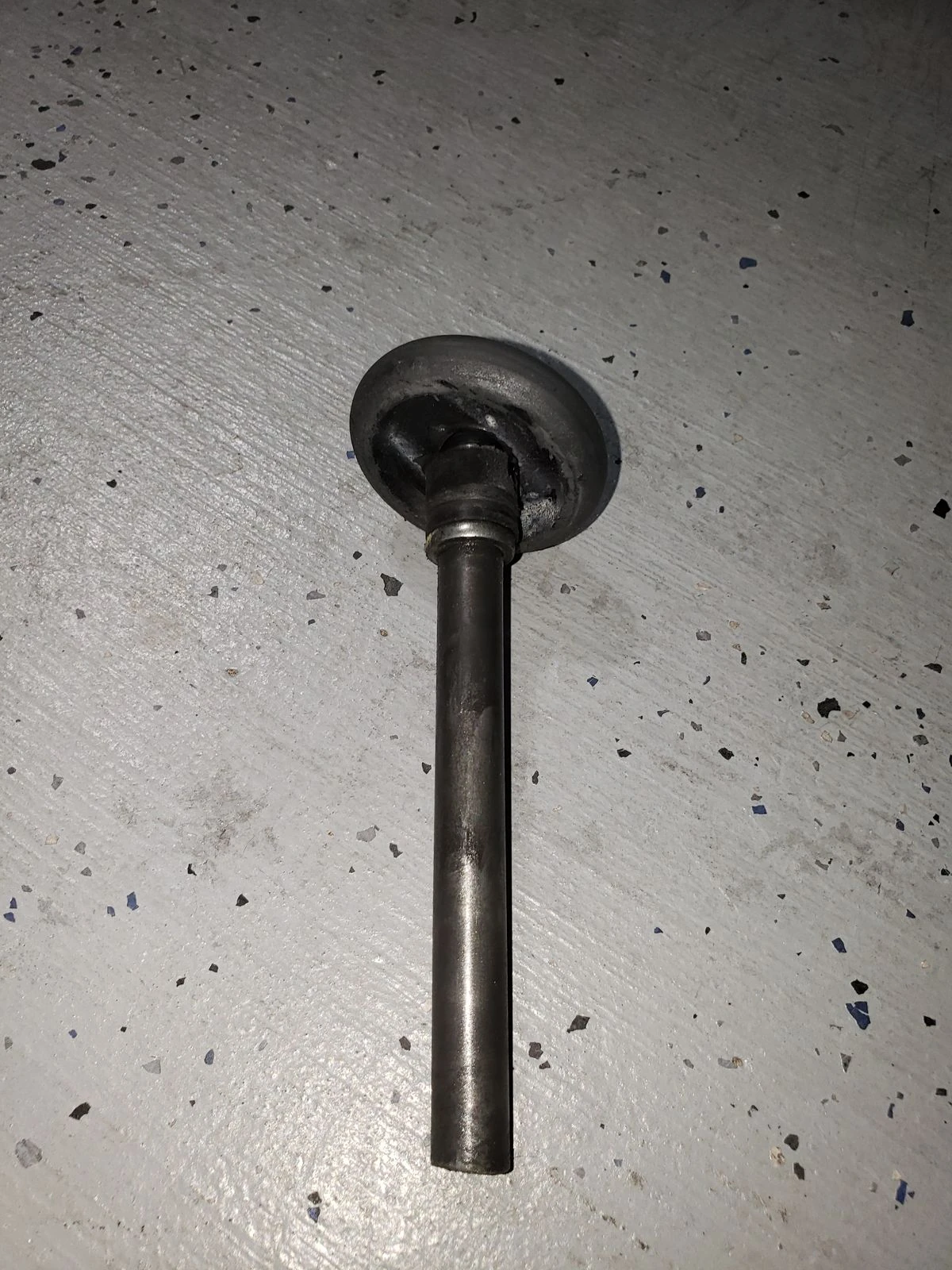
If your door is off track right now, keep it closed and keep the car out. A door half out of its track can fall. Our off track repair page covers what to do while you wait.
6. Dented or Cracked Panels
The car backs into the door. A ball hits it one too many times. Clopay notes that a damaged section can often be swapped by itself on a sectional door. HomeAdvisor lists a panel at $250 to $1,000, the widest range on this list, because the match matters. A brand new panel next to sun faded ones can look a shade off, so ask how close the color will be.
What These Repairs Cost
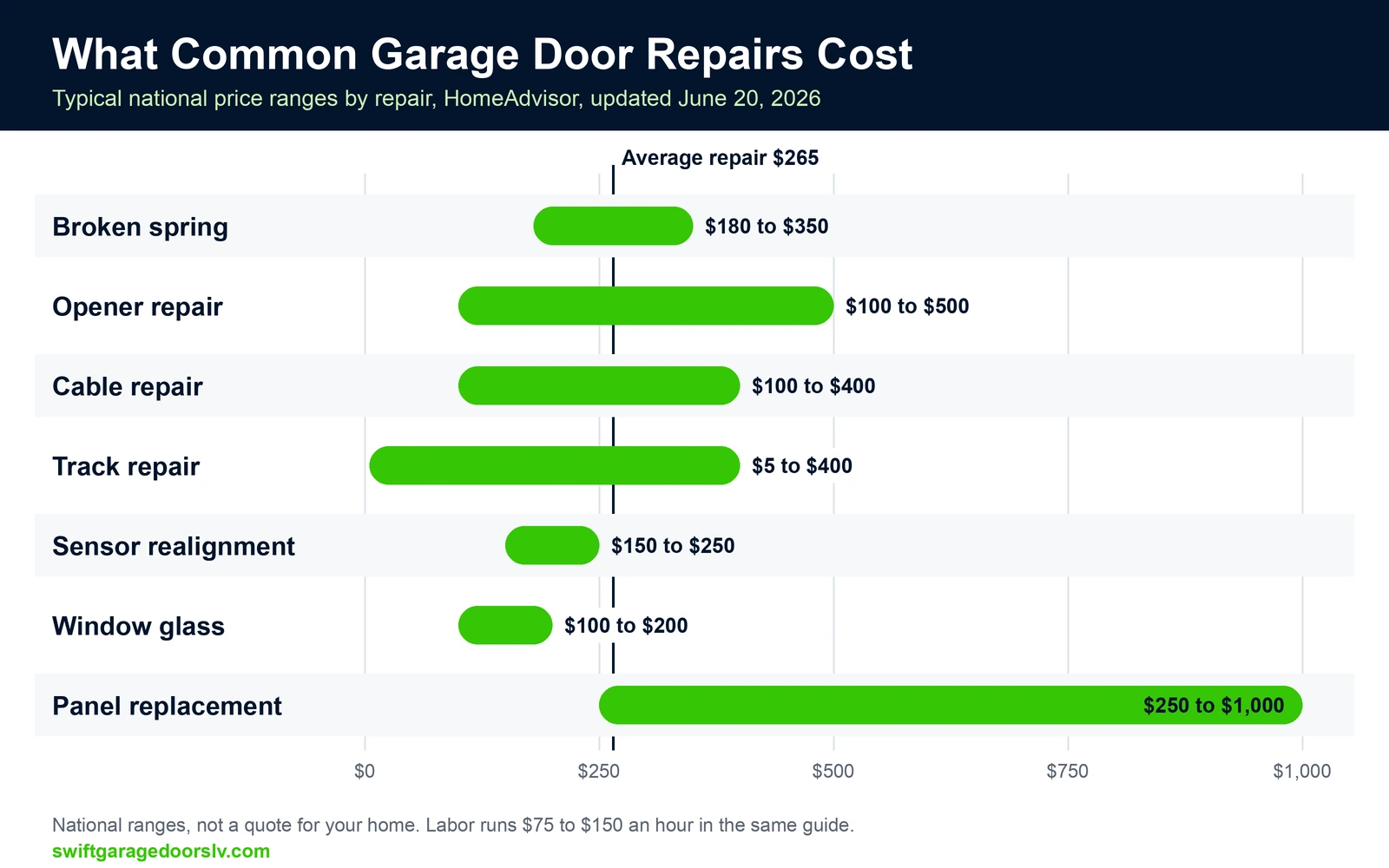
Here is the whole list in one view. These are national ranges from HomeAdvisor's repair cost guide, updated June 20, 2026. They are not our prices, and your door can land outside them.
| Repair | Typical Range | What You Notice |
|---|---|---|
| Broken spring | $180 to $350 | Loud bang, door too heavy to lift |
| Opener repair | $100 to $500 | Motor hums, remote dead, door stalls |
| Sensor realignment | $150 to $250 | Door reverses, sensor light off or blinking |
| Cable repair | $100 to $400 | Door hangs crooked, loose cable |
| Track repair | $5 to $400 | Grinding, shaking, door off track |
| Panel replacement | $250 to $1,000 | Dent, crack, bent section |
The same guide says labor runs $75 to $150 an hour and a quick service call for a simple fix can be $50 to $75. Ask what the trip fee covers before anyone rolls a truck, and get the full price in writing before work starts.
Why Las Vegas Is Hard on Garage Doors
Our heat is not a small thing. Harry Reid International Airport hit 120 degrees on July 7, 2024, an all time record per the National Weather Service, as reported by AZFamily. The old record was 117.
Heat and desert dust are hard on moving parts, and dust that settles on the sensor lenses can make a door reverse for no clear reason. That is why a door here does better with a yearly check. Our tune up and maintenance visit lubricates the system, balances the door, checks the cables and rollers, aligns the sensors and tests the safety reverse. For the spring side of the story, read our post on why springs break so often in Las Vegas.
What You Can Fix Yourself and What You Should Not
Some fixes are safe for anyone. Others can put you in the hospital. Here is the line.
- Safe to try. Change the remote battery. Wipe the sensor lenses and line them up until both lights are steady. Clear dirt out of the track. Test the safety reverse by setting something soft, like a roll of paper towels, in the door's path.
- Call a pro. Springs, cables, bent track, and anything with red bolts or a warning tag. Those parts hold the door under heavy tension.
If the door is stuck open, pull the red release cord only when the door is fully down, or have help holding it. A door with a broken spring can drop fast once it lets go of the opener.
Common Questions
What is the most common garage door repair?
A broken spring. Springs lift most of the door's weight and wear out with every trip up and down. Clopay, the big door maker, says spring repairs often top the list. After springs, openers, sensors, cables and rollers are the most common calls.
What is the most common problem with garage doors?
A door that will not open or will not close. When it will not open, a broken spring or cable is the usual cause. When it goes down and pops back up, the safety sensors are often out of line or blocked.
What is the average price to repair a garage door?
HomeAdvisor puts the national average at $265, with most people paying $155 to $379, as of its June 20, 2026 update. Small fixes can be under $100. Panel work can reach $1,000.
How long do garage door springs last?
A standard spring is commonly rated for about 10,000 cycles. One cycle is one open and one close. At 4 cycles a day that is under 7 years. Heavy use wears them out much faster, and higher cycle springs last longer.
What are common garage door opener problems?
A dead remote battery, a lost remote program, sensors out of line, a stripped gear, or a failed circuit board. If the motor hums but the door does not move, check for a broken spring first, because the opener cannot lift a door the spring is not holding.
Sources
- HomeAdvisor, Garage Door Repair Cost, updated June 20, 2026
- Clopay, Common Garage Door Repairs, January 31, 2025
- 16 CFR Part 1211, Safety Standard for Automatic Residential Garage Door Operators, read October 15, 2026
- DDM Garage Doors, High Cycle Garage Door Torsion Springs, read October 15, 2026
- AZFamily, Las Vegas hits 120 degrees, July 7, 2024
Prices on this page are typical national ranges from the sources above, read on October 15, 2026. They are not quotes for your home.
Door acting up? Call (702) 888-0085 or see our garage door repair services anywhere in the Las Vegas Valley.